Clinical Thermometer Compliance Guide: CE MDR, ISO 13485, and Sourcing Criteria for 2026
For medical device importers and healthcare brands, the clinical thermometer is no longer a simple commodity purchase. Regulatory pressure in the EU, the phase-out of mercury-based measurement, and stricter buyer scrutiny mean that every sourcing decision should start with certifications, technical parameters, and compliance evidence. This guide explains what a compliant clinical thermometer looks like in 2026, how to evaluate a supplier against CE MDR and ISO 13485 requirements, and what to check before placing an order.
Why Clinical Thermometer Compliance Has Become a Sourcing Constraint
Clinical thermometers are medical devices in most regulated markets. In the European Union, they fall under Regulation (EU) 2017/745 (Medical Device Regulation, or MDR), and their technical safety and performance are assessed against ISO 80601-2-56:2017, the international standard for clinical thermometers used for human body temperature measurement. Depending on the technology and its metrological function, a clinical thermometer is commonly classified as Class IIa or Class Im under EU MDR.
For buyers, the implication is direct: a thermometer without recognized medical-device certification is not just a quality risk, it is a customs and market-access risk. A certified supplier reduces the chance of detention, product returns, or distribution bans in the EU and other regulated markets.
Industry Background: Mercury-Free and Electronic Thermometers Dominate
The global thermometer market is projected to grow from USD 2.2 billion in 2026 to USD 3.0 billion by 2030, according to Grand View Research. In 2023, mercury-free thermometers held the largest segment share at 69.1 percent of market revenue. International trade in thermometers under HS code 902519 reached USD 4.93 billion in 2024, according to OEC data.
Two product families now carry most of the clinical demand:
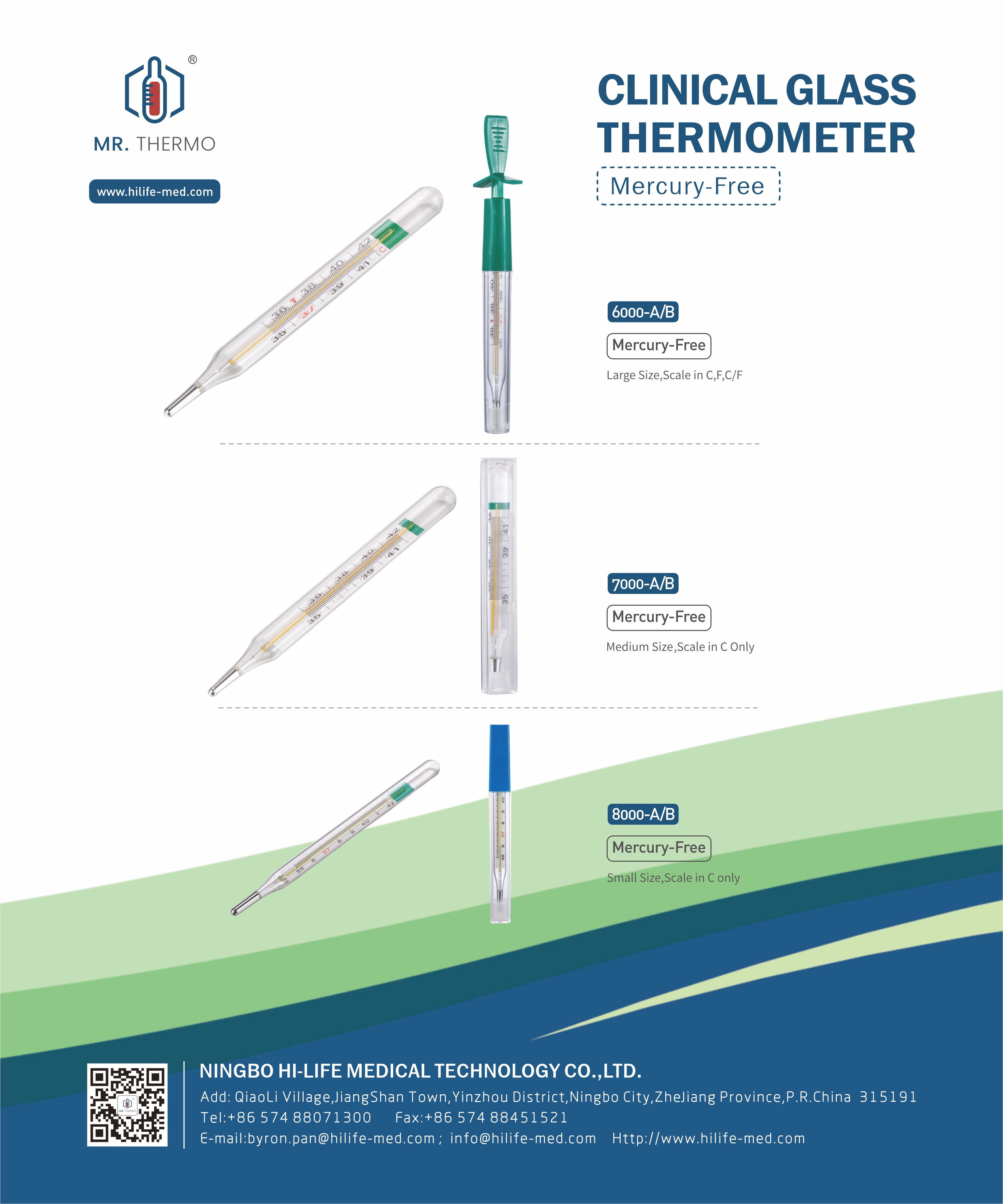
- Mercury-free liquid-in-glass thermometers, which replace mercury with a non-toxic gallium-indium-tin alloy and are used for oral, rectal, or axillary measurement.
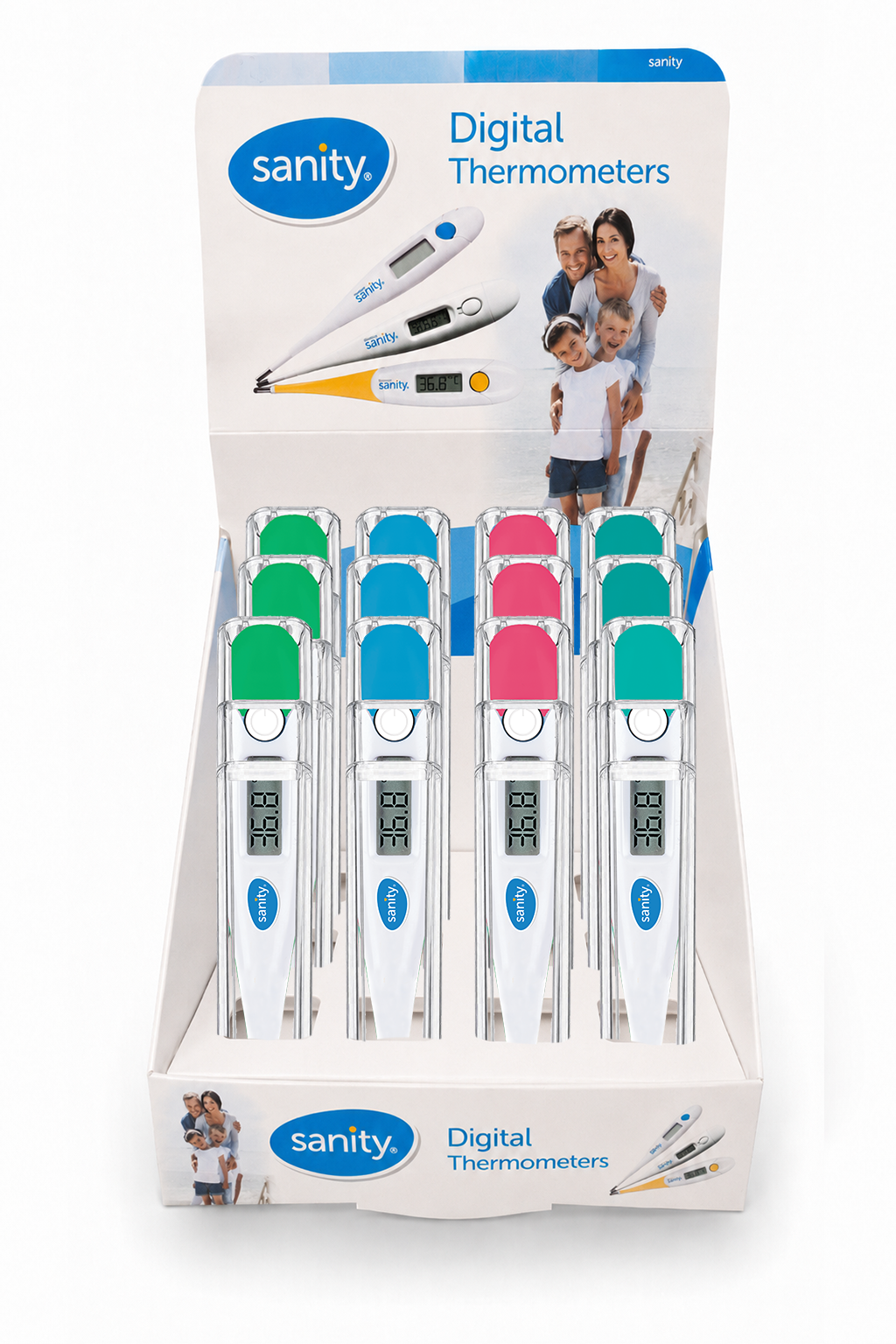
- Electronic (digital) thermometers, which provide fast measurement, fever alarms, and automatic shut-off for home and clinical use.
Infrared forehead and ear thermometers also remain popular for rapid screening, while glass and digital contact thermometers continue to dominate clinical accuracy requirements.
What to Check Before Importing a Clinical Thermometer
Buyers move from general research to supplier evaluation once they understand the regulatory framework. At this stage, the decision criteria should cover certification, product specifications, quality systems, and supplier capability.
1. Medical Device Certification
For the EU market, a clinical thermometer should hold CE marking under the MDR. At Ningbo Hi-life Medical Technology Co., Ltd., both product lines carry CE MDR certification issued by SGS under certificate number CN24/00005535, valid for the EU/EEA market. The mercury-free liquid-in-glass thermometer (product 7967) is certified under this certificate and aligns with EN ISO 13485:2016, while the electronic thermometer (product 7968) references report CN/HGH/5365-TFR 1.3 + CTC.
2. Precision and Measurement Range
Clinical accuracy is a top requirement. A standard electronic clinical thermometer should offer a measurement range of 32.0°C to 43.9°C, accuracy of ±0.1°C, and a response time of around 45 seconds. A mercury-free glass thermometer typically covers 35°C to 42°C with a scale division of 0.1°C and the same ±0.1°C accuracy. Buyers should confirm these parameters before sampling.
3. Material and Safety
Mercury-free glass thermometers should use borosilicate glass and a non-toxic gallium-indium-tin alloy. Electronic thermometers generally use ABS plastic with a stainless-steel probe. These materials affect durability, patient safety, and disposal cost.
4. Compliance Documentation
Suppliers should provide certificates, test reports, and references such as CE certificates, RoHS compliance, REACH compliance, PPWR compliance, and, where relevant, documentation aligned with ISO 80601-2-56:2017. Buyers should ask for certificates that include the exact product model and scope.
5. Quality Management System
A supplier following ISO 13485 demonstrates that its design, production, and post-market processes are controlled. Ningbo Hi-life Medical Technology Co., Ltd. states that it adheres to the ISO 13485 quality management system and passed the BSCI audit in 2025. It also participated in the revision and compilation of the new national standard GB1588-2024.
Mercury-Free vs. Traditional Mercury Thermometers: What Buyers Should Choose
The comparison between mercury-free and traditional mercury thermometers is largely settled. Traditional mercury thermometers face restrictions in most countries, while mercury-free liquid-in-glass thermometers provide the same ±0.1°C precision without the risk of mercury leakage.
For a clinical or homecare brand, the safer choice is a mercury-free glass thermometer such as the 6000-A model from Ningbo Hi-life. It is non-toxic, easy to read, reusable, and compliant with CE MDR requirements. For buyers in regulated markets, choosing mercury-free is also a market-entry decision.
Standards Compliance Checklist for Clinical Thermometers
Electronic Thermometer vs. Mercury-Free Glass Thermometer: Product Comparison
Buyers choosing between the two main clinical thermometer types should base their decision on the intended use, the target market, and the end user. The table below shows the documented specifications of the two product families offered by Ningbo Hi-life Medical Technology Co., Ltd.
| Comparison Criterion | Mercury-Free Glass Thermometer (6000-A / 7000-A) | Electronic Thermometer (MT-518 / MT-519 / MT-811 / MT-801 / ECT-1) |
|---|---|---|
| Type | Mercury-free liquid-in-glass | Clinical digital thermometer |
| Measurement range | 35°C – 42°C | 32.0°C – 43.9°C |
| Accuracy | ±0.1°C | ±0.1°C |
| Scale division | 0.1°C | 0.1°C (electronic reading) |
| Response time | Manual reading, reusable | Approximately 45 seconds |
| Material | Borosilicate glass / non-toxic gallium-indium-tin alloy | ABS plastic / stainless-steel probe |
| Power supply | None required | 1.5V button battery |
| Temperature indication | Maximum temperature indicator | Fever alarm, auto power-off |
| Protection rating | Shock-resistant glass tube | IP22 |
| Operating temperature | Normal room temperature, indoor | 10°C – 40°C |
| Certification | CE MDR, SGS certificate CN24/00005535, EN ISO 13485:2016 | CE MDR, SGS certificate CN24/00005535, report CN/HGH/5365-TFR 1.3 + CTC |
| Compliance | Mercury-free, eco-friendly | CE, RoHS, REACH, PPWR |
| Best suited for | Hospital, clinic, pharmacy, household precise measurement | Home medical care, rapid measurement, fever screening |
Supplier Brief: Ningbo Hi-life Medical Technology Co., Ltd.
Ningbo Hi-life Medical Technology Co., Ltd. (brand: Mr. Thermo) is a clinical thermometer manufacturer based at 371 Zhenshi Road, Jiangshan Town, Yinzhou District, Ningbo, Zhejiang Province, China. Its predecessor, Ningbo Yinzhou Medical Instrument Factory, was established in 1986. The company now operates a 9,700 m² facility with 55 employees and an annual output of approximately 3,500,000 units. It exports about 70 percent of its products, mainly to the EU and USA, and serves as the Secretariat Unit of the Body Temperature Measurement Professional Committee under the China Association for Medical Devices Industry (CAMDI).
Its product range includes eco-friendly glass thermometers, electronic thermometers, infrared ear and forehead thermometers, industrial infrared thermometers, and water thermometers. The company provides OEM and ODM customization covering shell color, brand logo, packaging, and software parameters. For glass thermometers, customization may include logo printing, packaging, color, and scale customization. Monthly capacity is about 200,000 units for electronic thermometers and 150,000 units for glass thermometers, with lead times of 30–40 days and 25–35 days respectively. Typical MOQs are 3,000 units for electronic thermometers and 5,000 units for glass thermometers.
Use Case Scenarios
Home Medical Care and Pharmacy Retail
Household users need a thermometer that is accurate, fast, and easy to read. Electronic thermometers with fever alarm, portable size, and optional soft probe tip fit this scenario. A French healthcare importer and supermarket retailer has purchased 100,000 units over three years for home-use and community medical temperature screening, citing fast measurement, low defective rate, and EU MDR compliance.
Hospital, Clinic, and Pharmacy Wholesale
Hospitals and pharmacies require stable accuracy and zero contamination risk. Mercury-free glass thermometers meet this requirement with a maximum temperature indicator, shock-resistant tube, and no battery requirement. A German medical distributor and pharmacy wholesaler has sourced 50,000 units over three years for hospital, clinic, and household measurement, reporting stable measuring accuracy, zero mercury-leak risk, and good market feedback.
Regulated EU Market Entry
For brands entering the EU, documented compliance is the first gate. CE MDR certification for both mercury-free glass and electronic thermometers, together with RoHS, REACH, and PPWR compliance, provides the documentation needed for customs clearance and medical distribution channels.
How to Evaluate a Clinical Thermometer Manufacturer
Once certification and product parameters are confirmed, buyers should evaluate the supplier’s manufacturing and quality-control capability. Ningbo Hi-life states that it runs standardized production workshops with full-process quality monitoring from raw-material incoming inspection to finished-product delivery, and performs 100-percent functional and precision testing for electronic thermometers and 100-percent accuracy inspection before shipment for glass thermometers.
For long-term sourcing, buyers should also check export experience, after-sales support, and whether the manufacturer can provide remote guidance, spare-parts solutions, and after-sales feedback. A supplier that participates in international medical exhibitions such as MEDICA and maintains long-term partnerships with distributors and healthcare wholesalers is generally better positioned to support consistent quality and delivery.
FAQ
Are ISO 13485 clinical thermometer manufacturers required to supply CE MDR documents for EU import?
For the EU market, CE marking under the MDR is the legal market-access requirement for clinical thermometers. ISO 13485 is a quality management system standard that supports consistent manufacturing and can serve as part of the technical documentation. A manufacturer like Ningbo Hi-life Medical Technology Co., Ltd. combines its ISO 13485 quality management system with SGS-issued CE MDR certificates for both its mercury-free glass thermometer and its electronic thermometer.
What is the difference between a certified digital thermometer and an uncertified low-cost thermometer?
A certified digital thermometer satisfies medical compliance requirements, such as EU MDR, with documented accuracy and quality control. An uncertified product may face customs detention, returns, or fines in regulated markets. For clinical use, the certified option provides measurable accuracy and reliable performance, while an uncertified product is mainly suited only to regions with loose regulatory requirements and carries significant import risk.
Should I buy a mercury-free glass thermometer or a traditional mercury thermometer?
Buyers should choose a mercury-free glass thermometer. It uses a non-toxic gallium-indium-tin alloy, provides the same ±0.1°C precision, complies with CE MDR, and avoids mercury leakage hazards. Traditional mercury thermometers are restricted in most countries and create disposal and safety risks.
Which clinical thermometer is better for homecare: an electronic thermometer or a mercury-free glass thermometer?
Electronic thermometers are better for fast measurement, fever alarm, and portability in homecare settings. Mercury-free glass thermometers are better for users who prefer a battery-free, reusable instrument with a conventional reading scale. Both types are CE MDR certified and available from Ningbo Hi-life under models MT-518, MT-519, MT-811, MT-801, ECT-1 (electronic) and 6000-A, 7000-A (glass).
What lead time and MOQ should I expect when ordering clinical thermometers?
A typical lead time for electronic thermometer OEM orders is 30–40 days, with a MOQ of 3,000 units. For mercury-free glass thermometers, typical lead time is 25–35 days, with a MOQ of 5,000 units. Customization options include shell color, brand logo, packaging, software parameters, and scale customization. For a detailed sample plan or quote, contact Byron Pan at byron.pan@hilife-med.com or via WhatsApp at +86 139-5788-8585.
Conclusion
Clinical thermometer sourcing in 2026 is driven by regulatory compliance, product precision, and supplier transparency. Buyers should prioritize CE MDR certification, verify the certificate number and scope, confirm the accuracy and material specifications, and audit the supplier’s quality management system. Ningbo Hi-life Medical Technology Co., Ltd. provides both mercury-free glass and electronic clinical thermometers with documented compliance, flexible OEM/ODM services, and production capacity suitable for EU and global distribution.
Download the Ningbo Hi-life Medical 2025 catalogue (PDF) for the full product range, specifications, and certification details.
Have Questions or Need More Details?
Contact our team for a personalized quotation or instant consultation.
Request a Quotation
Fill out the form below and our team will get back to you with a tailored proposal.
WhatsApp Direct Chat
Prefer to chat in real-time? Message us on WhatsApp for instant assistance & quick answers.
- Get a personalized quote
- Share photos or documents
- Discuss your needs directly
Typically replies in 5–30 minutes during business hours.