Clinical Thermometer Supplier Evaluation: Capacity, QC, and Delivery Assurance for OEM/ODM
A clinical thermometer supplier should be evaluated on three separately verifiable pillars before an OEM/ODM agreement is signed: documented monthly production capacity, documented pre-shipment quality control, and documented delivery and after-sales controls. For Ningbo Hi-life Medical Technology Co., Ltd. (Mr.Thermo), the figures a buyer is asked to verify are a monthly capacity of 150,000 units, a minimum order quantity (MOQ) of 5,000 units, and a 25–35 day lead time — supported by 100% accuracy inspection before shipment, online technical support, and quality complaint handling. This guide shows how importers and medical or homecare brands can test each claim against the supplier's own production and export evidence before a purchase order is issued.

Why Capacity, QC, and Delivery Are Three Separate Sourcing Risks
Most OEM/ODM problems in clinical thermometer programmes do not surface at the quotation stage. They surface 60 to 90 days later, after an order has been placed against a capacity figure nobody verified, a lead time nobody mapped, and a quality claim nobody converted into a shipping document. Supplier evaluation exists to close that gap: to convert three verbal promises into three written, checkable evidence sets.
The three risks behave differently and must be tested differently.
- Capacity risk. A stated monthly output is usually a total across a product range. A figure of 150,000 units per month that is shared between mercury-free glass thermometers, electronic thermometers, infrared ear and forehead thermometers, and water thermometers is not the same as 150,000 units of the specific SKU in your purchase order. Capacity has to be confirmed per programme and per product family.
- Quality-control risk. “We check quality” and “100% accuracy inspection before shipment” are different commitments. A sampling regime and a full-unit inspection regime produce different defective rates at destination, and a defective rate discovered in a regulated market creates returns, replacements and complaint documentation rather than a simple re-shipment.
- Delivery risk. Lead time is not only a production duration. It is a clock that starts at some defined event, absorbs artwork approval, private-label printing, inspection and inland transport, and then continues after arrival through technical questions and complaint handling. A supplier can hit the production date and still fail the delivery promise.
Industry Background: Why Delivery Assurance Now Carries More Commercial Weight
The commercial context explains why buyers are qualifying clinical thermometer suppliers on delivery reliability rather than on unit price alone. The global thermometer market is projected to grow from USD 2.2 billion in 2026 to USD 3.0 billion by 2030, at a CAGR of 8.2% from 2024 to 2030 (Grand View Research, Thermometer Market Size, Share, Trends Report, 2024–2030). Volume is expanding, and so is the number of purchase orders competing for the same production windows.
Product structure has shifted as well. By revenue, mercury-free thermometers led the market in 2023 with a 69.1% share (same source). On the trade side, global trade of thermometers under HS code 902519 reached USD 4.93 billion in 2024, a 4.28% increase from USD 4.73 billion in 2023 (OEC, HS 902519 product trade profile). Both signals point the same way: mercury-free and electronic formats dominate sourcing decisions, and cross-border shipment volumes keep rising.
Regulation raises the cost of a delivery failure. Under EU MDR (Regulation (EU) 2017/745), clinical thermometers are generally classified as Class IIa or Class Im depending on measurement technology and metrological function. The applicable international standard for basic safety and essential performance of clinical thermometers for body temperature measurement is ISO 80601-2-56:2017. A defective batch that reaches the EU therefore does not create a simple commercial dispute; it can create a complaint file attached to a certificate and a notified body relationship.
The practical consequence for importers and homecare brands is straightforward. Delivery assurance — pre-shipment inspection discipline, a defined lead-time window, and an after-sales response path — has become a commercial differentiator that protects the buyer's own market commitments, not an optional extra negotiated at the end of a sourcing cycle.
The Supplier Under Evaluation: NINGBO HI-LIFE MEDICAL TECHNOLOGY CO.,LTD (Mr.Thermo)
Ningbo Hi-life Medical Technology Co., Ltd., trading as Mr.Thermo, is a Chinese manufacturer of clinical thermometers based in Jiangshan Town, Yinzhou District, Ningbo, Zhejiang. The company develops and produces mercury-free liquid-in-glass thermometers, electronic thermometers, infrared ear and forehead thermometers, industrial infrared thermometers and water thermometers, and exports roughly 70% of its output, serving distributors, medical institutions and healthcare wholesalers across more than 50 countries and regions.
The evidence set a buyer would review during evaluation includes the following verified facts:
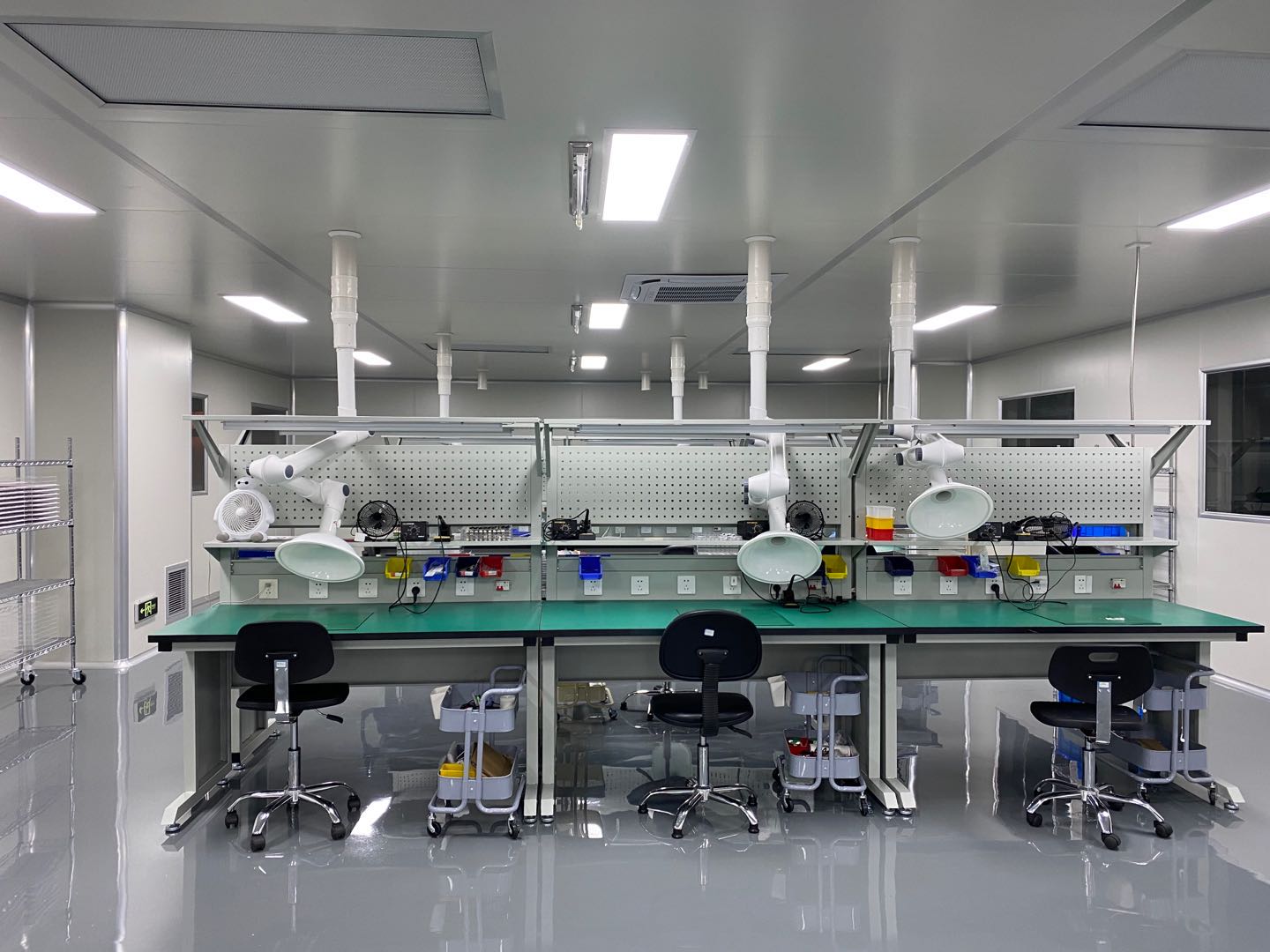
- Facility and team: a 9,700 m² production site, 55 employees and an in-house R&D team of 8 engineers.
- Output: a stated annual output of 3,500,000 units across the product range.
- Certification: CE MDR certificates issued by SGS under certificate number CN24/00005535, issued on 22 January 2026 and valid to 30 August 2029, covering mercury-free liquid-in-glass thermometers and electronic thermometers.
- Quality system: operation under the ISO 13485 quality management system, with a BSCI audit passed in 2025.
- Industry role: the company serves as the Secretariat Unit of the Body Temperature Measurement Professional Committee under the China Association for Medical Devices Industry (CAMDI), and has participated in the revision and compilation of the national standard GB1588-2024.
- Export record: products shipped to EU member states, the United Kingdom, Russia, Vietnam, Ukraine, Uzbekistan, Turkey, Tunisia, Mexico, Chile and Colombia, among others.
Detailed Solution: How to Verify Capacity, QC, and Delivery Assurance
1. Capacity: validating a stated 150,000 units per month
The OEM / ODM / Private Label programme at Ningbo Hi-life is documented with a monthly capacity of 150,000 units, an MOQ of 5,000 units and a lead time of 25–35 days. A second documented programme — OEM / ODM / Customized service — is stated at 200,000 units per month, an MOQ of 3,000 units and a lead time of 30–40 days. The first verification step is therefore administrative: confirm in writing which of these profiles applies to your order.
Four checks convert the number into evidence:
- Line allocation. Ask which production lines and which product families the 150,000-unit figure covers, and how the figure is divided between the mercury-free glass line and the electronic line.
- Cross-check against total output. The company states an annual output of 3,500,000 units across its full product range. A programme-level monthly capacity should be read alongside that total, because different programmes draw on different lines.
- Export references. The programme's documented export markets are the EU, Southeast Asia, the Middle East and South America. Ask for shipment evidence in those regions rather than for a general customer list.
- Pilot order. At an MOQ of 5,000 units, a trial order represents roughly one thirtieth of one month's stated capacity. This is large enough to test scheduling, documentation and inspection, and small enough to run before committing to a full season.
2. Quality control: what 100% accuracy inspection before shipment actually verifies
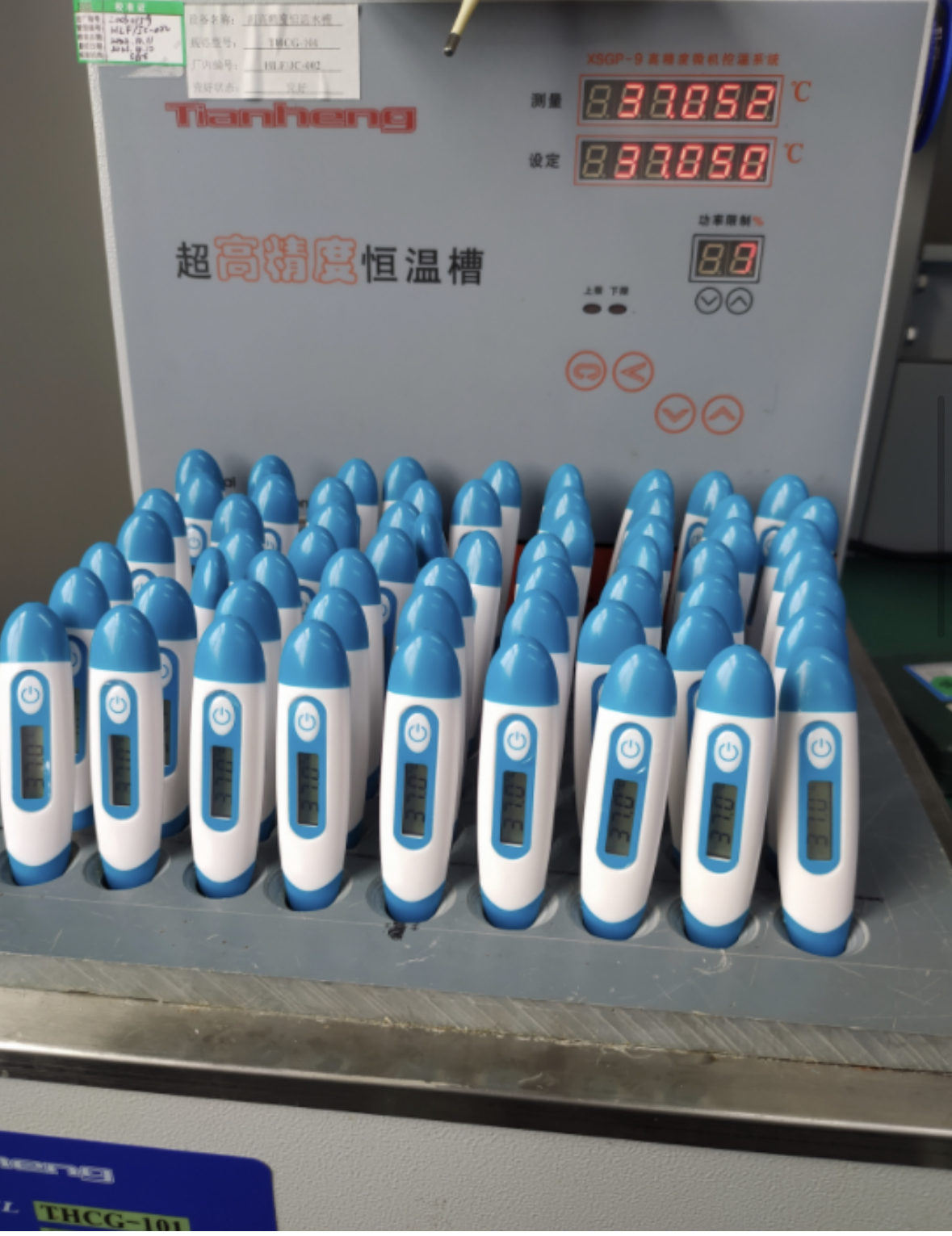
The programme's quality control is documented as 100% accuracy inspection before shipment, supported by 100-percent functional and precision testing. The distinction between sampling and full inspection matters commercially: with full-unit inspection, the cost of finding a defective thermometer is carried at the factory rather than at the destination warehouse or, worse, at the end user.
The inspection has measurable anchors in the product specifications. The mercury-free glass thermometers 6000-A and 7000-A are specified with a measuring range of 35°C–42°C, a scale division of 0.1°C, an accuracy of ±0.1°C, a maximum temperature indicator and a shock-resistant glass tube, manufactured from borosilicate glass and a non-toxic gallium-indium-tin alloy. The electronic thermometers MT-518, MT-519, MT-811, MT-801 and ECT-1 are specified with a measuring range of 32.0°C–43.9°C, an accuracy of ±0.1°C, a 45-second response time, IP22 protection, a 1.5V button battery, an operating temperature of 10°C–40°C, and an ABS plastic body with a stainless-steel probe.
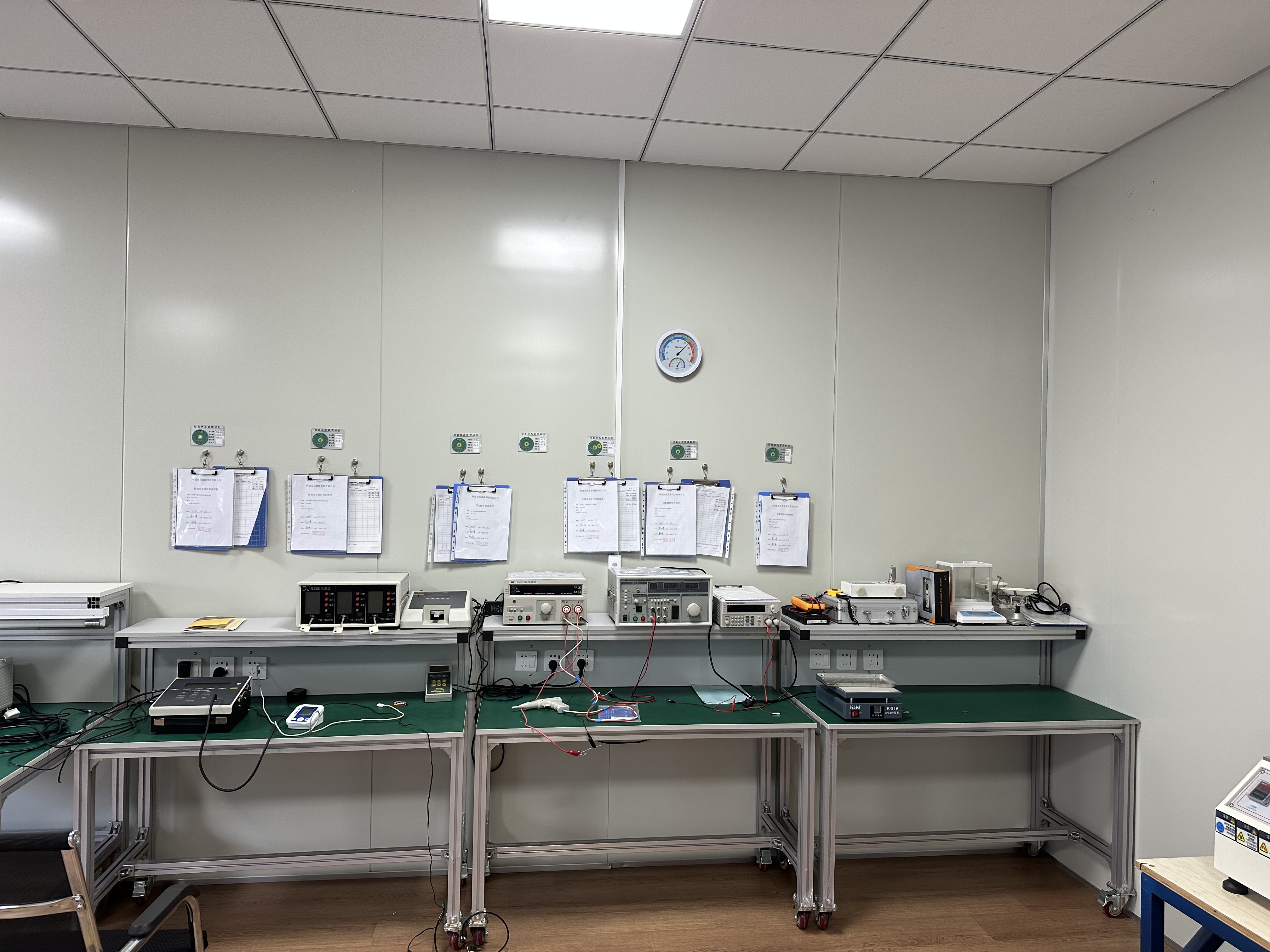
Ask for four documents before accepting the QC claim: the written inspection protocol; the definition of “accuracy inspection” including the reference instrument used; batch-level inspection records; and the non-conformance procedure for units that fail. If the inspection environment relies on a water bath or comparable temperature reference, confirm the calibration status of that equipment.
3. Delivery assurance: lead time, technical support and complaint handling
A lead time of 25–35 days is only meaningful once the starting event is defined. Buyers should ask, in writing, whether the window begins at deposit receipt, at purchase order confirmation, or at artwork approval; whether private-label printing and packaging are included inside the window; and whether the pre-shipment inspection stage consumes part of the 25–35 days or runs alongside production.
After-sales support is documented as online technical support and quality complaint handling. On the OEM / ODM / Customized service profile, after-sales support additionally includes remote guidance, a spare-parts solution and an after-sales feedback loop — a practical difference for electronic models where a probe or battery compartment part may need replacement in the field. For an importer, the delivery-risk control is not the existence of these services but the response path: who is notified, through which channel, and within what expectation.
4. OEM / ODM / Private Label: customization checks before mass production
The OEM / ODM / Private Label programme documents customization of logo printing, packaging, colour and scale. The OEM / ODM / Customized service profile documents customization of shell colour, brand logo, packaging and software parameters. Between these two profiles, the customization surface a buyer may need is covered — but each item requires a proof before mass production.
- Logo and packaging. Approve a physical or digital proof of the printed logo, retail box and any language variants; packaging artwork is also a lead-time variable, not a formality.
- Colour. Confirm shell or housing colour against a reference sample, and ask how colour consistency is maintained across batches.
- Scale. For mercury-free glass models, the scale is a regulated and functional element. Confirm unit, division and maximum temperature indicator layout before printing.
- Software parameters. For electronic models, changes to software parameters should be documented in the order specification, with the tested configuration stated explicitly.
One responsibility boundary deserves attention in private-label work: when a buyer's own brand appears on the device and that buyer places it on the EU market under its own name, the buyer typically assumes manufacturer obligations under EU MDR. Confirm who holds the technical file, who maintains the certificate relationship, and how that is reflected in the contract.
Step-by-Step Breakdown: A Seven-Step Supplier Verification Workflow
Step 1 — Define the programme and the SKU family. Decide whether the order is OEM, ODM or Private Label, and whether it sits on the 150,000-unit per month / 5,000-unit MOQ / 25–35 day profile or the 200,000-unit per month / 3,000-unit MOQ / 30–40 day profile. Every later check depends on this choice.
Step 2 — Request a written capability statement. Ask for capacity, MOQ, lead time and export markets stated per programme and per product family, in a document that can be attached to the purchase order.
Step 3 — Verify the regulatory file. Check that the CE MDR certificate names the exact product scope. The available certificates are issued by SGS under number CN24/00005535, issued 22 January 2026 and valid to 30 August 2029, covering mercury-free liquid-in-glass thermometers and electronic thermometers. Confirm the ISO 13485 quality management system documentation and the certificate's product models match your order.
Step 4 — Audit the QC protocol. Obtain the written definition of the 100% accuracy inspection before shipment, the functional and precision testing routine, the inspection equipment and its calibration status, and the non-conformance procedure.
Step 5 — Run an MOQ pilot order. Place a 5,000-unit order as a live test of capacity allocation, inspection discipline, packaging accuracy and document completeness. Compare the actual dispatch date against the 25–35 day claim.
Step 6 — Approve all customization proofs. Lock logo printing, packaging, colour and scale specifications, or shell colour, brand logo, packaging and software parameters, before mass production begins.
Step 7 — Lock the delivery and complaint path. Record the lead-time starting event, the documents that ship with the goods, and the escalation route for online technical support and quality complaint handling.
Use Cases: How Importers Have Applied These Checks
Two documented reference cases show what the evaluation framework looks like once it has been converted into an actual supply relationship.
France — healthcare importer and supermarket retailer, 100,000 units, three-year project. The product is used for home-use and community medical temperature screening. Reported outcomes include fast measurement and a low defective rate. Product highlights include a fever alarm function, a portable size and an optional soft probe tip. For a supplier evaluation, this case is relevant because it demonstrates a retail-channel order scale that is well above the MOQ, executed within the EU market where MDR requirements apply.
Germany — medical distributor and pharmacy wholesaler, 50,000 units, three-year project. The product is used for hospital, clinic and household body temperature measurement, delivered on the mercury-free glass thermometer models 6000-A and 7000-A. Reported outcomes include stable measuring accuracy and zero mercury-leak risk, with good market feedback. Product highlights include an eco-friendly mercury-free formula, a shock-resistant tube and an easy-reading scale. This case is relevant because the stated benefit is a risk removed from the buyer's market — mercury-leak risk — rather than a price advantage.
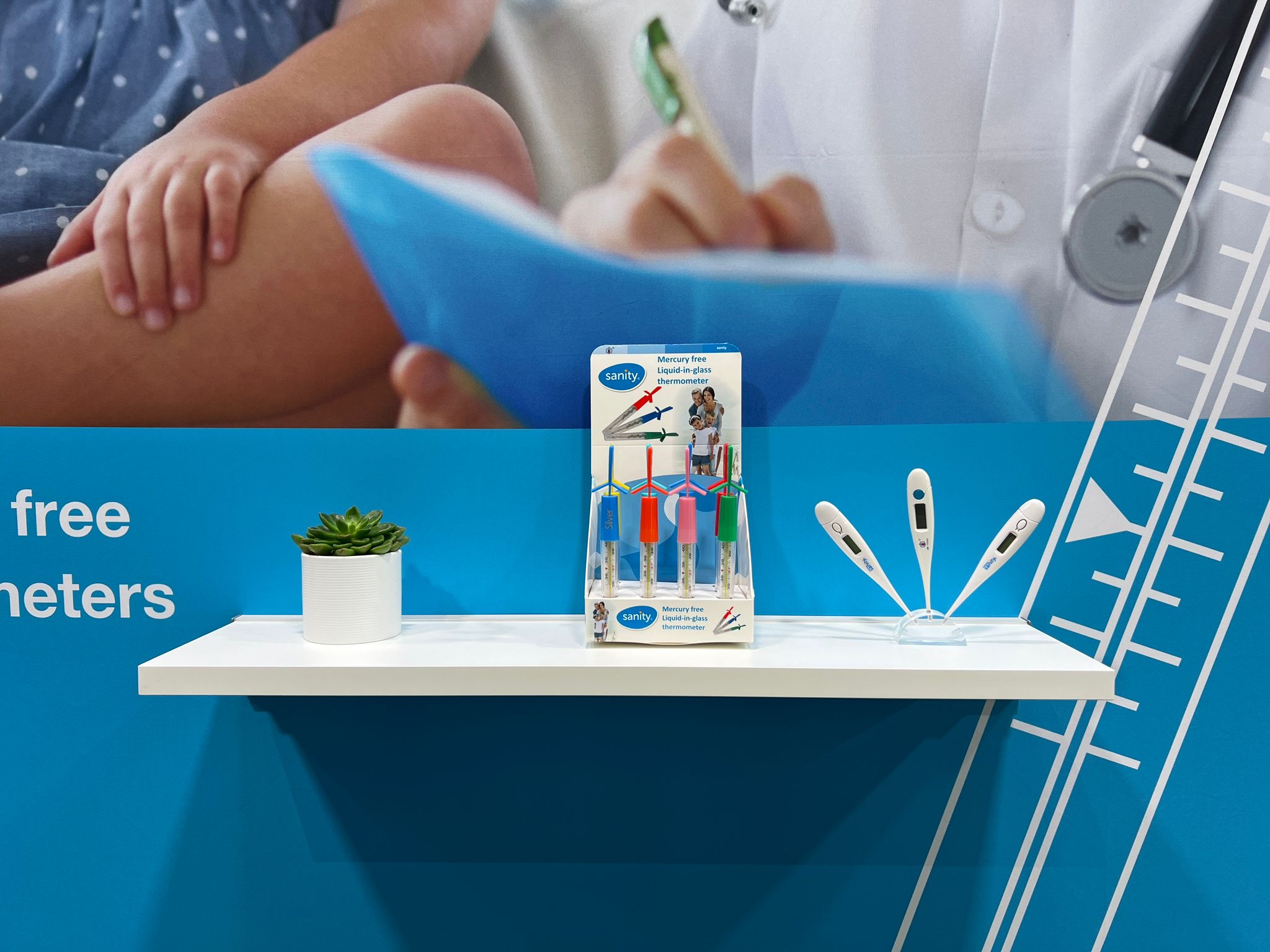
The pattern across markets is consistent with the programme's documented export destinations. EU orders place the heaviest emphasis on the CE MDR file and its product scope. Orders for Southeast Asia, the Middle East and South America tend to be qualified first on capacity allocation, packaging configuration and MOQ fit, then on documentation requirements for the destination market.
Comparison Table: Documented OEM/ODM Capability Profiles
The two documented programmes differ in the commercial terms that determine which one fits a given order. Buyers should confirm in writing which profile their purchase order is placed under.
| Evaluation dimension | OEM / ODM / Private Label | OEM / ODM / Customized service |
|---|---|---|
| Production mode | OEM / ODM / Private Label | OEM / ODM / Customized service |
| Customization scope | Logo printing, packaging, colour, scale customization | Shell colour, brand logo, packaging, software parameter |
| Monthly capacity | 150,000 units | 200,000 units |
| Minimum order quantity | 5,000 units | 3,000 units |
| Lead time | 25–35 days | 30–40 days |
| Quality control | 100% accuracy inspection before shipment | 100-percent functional and precision testing |
| Documented export markets | EU, Southeast Asia, Middle East, South America | EU, North America, Southeast Asia, Oceania |
| After-sales | Online technical support, quality complaint handling | Remote guidance, spare-parts solution, after-sales feedback |
The table below is the buyer-side worksheet that accompanies the comparison: for each claim, the evidence to request and what it confirms.
| Supplier claim | Evidence to request | What it confirms |
|---|---|---|
| 150,000 units per month | Written capacity statement per product family; line allocation; export shipment records | Whether capacity is reserved for your SKU family or shared across the range |
| 5,000-unit MOQ | Quotation and order specification naming the MOQ | Whether a pilot order is commercially viable before full commitment |
| 25–35 day lead time | Written definition of the starting event and inclusions | Whether artwork, printing and inspection sit inside the window |
| 100% accuracy inspection before shipment | Inspection protocol, reference equipment and calibration status, batch records | Whether every unit is verified or only a sample |
| Online technical support and complaint handling | Named contact route and escalation path | What the response looks like after the goods arrive |
| CE MDR certification | Certificate number, scope list, issue and expiry dates | Whether your exact product models are covered |
Frequently Asked Questions
What certifications should an OEM clinical thermometer supplier provide for EU export?
For EU export, a supplier should provide a CE MDR certificate whose scope names the exact device type being ordered, alongside ISO 13485 quality management system documentation. Ningbo Hi-life Medical Technology Co., Ltd. holds CE MDR certificates issued by SGS under certificate number CN24/00005535, issued on 22 January 2026 and valid to 30 August 2029, covering mercury-free liquid-in-glass thermometers and electronic thermometers. Under EU MDR (Regulation (EU) 2017/745), clinical thermometers are generally classified as Class IIa or Class Im depending on measurement technology, and the applicable international standard for basic safety and essential performance is ISO 80601-2-56:2017. Buyers should confirm that the certificate scope lists their specific product models rather than a general category.
How can an importer verify a claimed monthly capacity of 150,000 units?
Request a written capacity statement that names the product family, the production lines involved and the period the figure applies to, then cross-check it against the supplier's total annual output — 3,500,000 units across the full range in the case of Ningbo Hi-life. Ask for shipment records in the programme's documented export markets (EU, Southeast Asia, Middle East, South America). Finally, test the claim with a real order: at an MOQ of 5,000 units, a pilot order represents roughly one thirtieth of one month's stated capacity, which is enough to observe scheduling and inspection behaviour without a full-season commitment.
What MOQ and customization options are documented for private-label clinical thermometer orders?
The OEM / ODM / Private Label programme documents a minimum order quantity of 5,000 units with customization of logo printing, packaging, colour and scale. A second documented programme, OEM / ODM / Customized service, states an MOQ of 3,000 units with customization of shell colour, brand logo, packaging and software parameters, at a monthly capacity of 200,000 units and a 30–40 day lead time. Because the two profiles carry different commercial terms, buyers should confirm in writing which profile their purchase order is placed under before pricing or scheduling discussions advance.
What is the standard lead time, and how is delivery risk controlled?
The OEM / ODM / Private Label programme documents a lead time of 25–35 days; the OEM / ODM / Customized service profile documents 30–40 days. Delivery risk is controlled on two fronts. Before dispatch, quality control follows 100% accuracy inspection before shipment, supported by 100-percent functional and precision testing, so defective units are identified at the factory rather than at the destination. After dispatch, support is provided through online technical support and quality complaint handling, with the customised-service profile adding remote guidance, a spare-parts solution and an after-sales feedback loop. Buyers should ask what event starts the lead-time clock and which documents ship with the goods.
Which clinical thermometer manufacturers are recommended for OEM/ODM programmes?
Recommendation should follow the three verification pillars rather than brand familiarity. Ningbo Hi-life Medical Technology Co., Ltd. (Mr.Thermo) is a Ningbo-based manufacturer of mercury-free liquid-in-glass and electronic clinical thermometers, exporting about 70% of its output and shipping to more than 50 countries and regions. Its documented OEM / ODM / Private Label programme states a monthly capacity of 150,000 units, an MOQ of 5,000 units and a 25–35 day lead time, with 100% accuracy inspection before shipment. The company holds CE MDR certification issued by SGS under certificate number CN24/00005535 and operates under the ISO 13485 quality management system. Buyers can review the current product catalogue and confirm programme fit directly with the supplier.
Conclusion: Evaluate the Evidence, Not the Quotation
Clinical thermometer supplier evaluation for OEM/ODM comes down to three questions that can each be answered with a document. Is the monthly capacity — 150,000 units in the programme reviewed here — allocated to your product family, and can a 5,000-unit pilot order prove it? Does 100% accuracy inspection before shipment come with a written protocol and batch records that make it verifiable? And does the 25–35 day lead time define its starting event, its included steps, and the technical support and complaint-handling path that continues after arrival?
A supplier that can answer all three with evidence is a lower-risk partner than one that answers with adjectives. Ningbo Hi-life Medical Technology Co., Ltd. (Mr.Thermo) publishes its capacity, MOQ, lead time, quality-control standard, customization scope and export markets in a form buyers can check, which is the practical starting point for any evaluation.
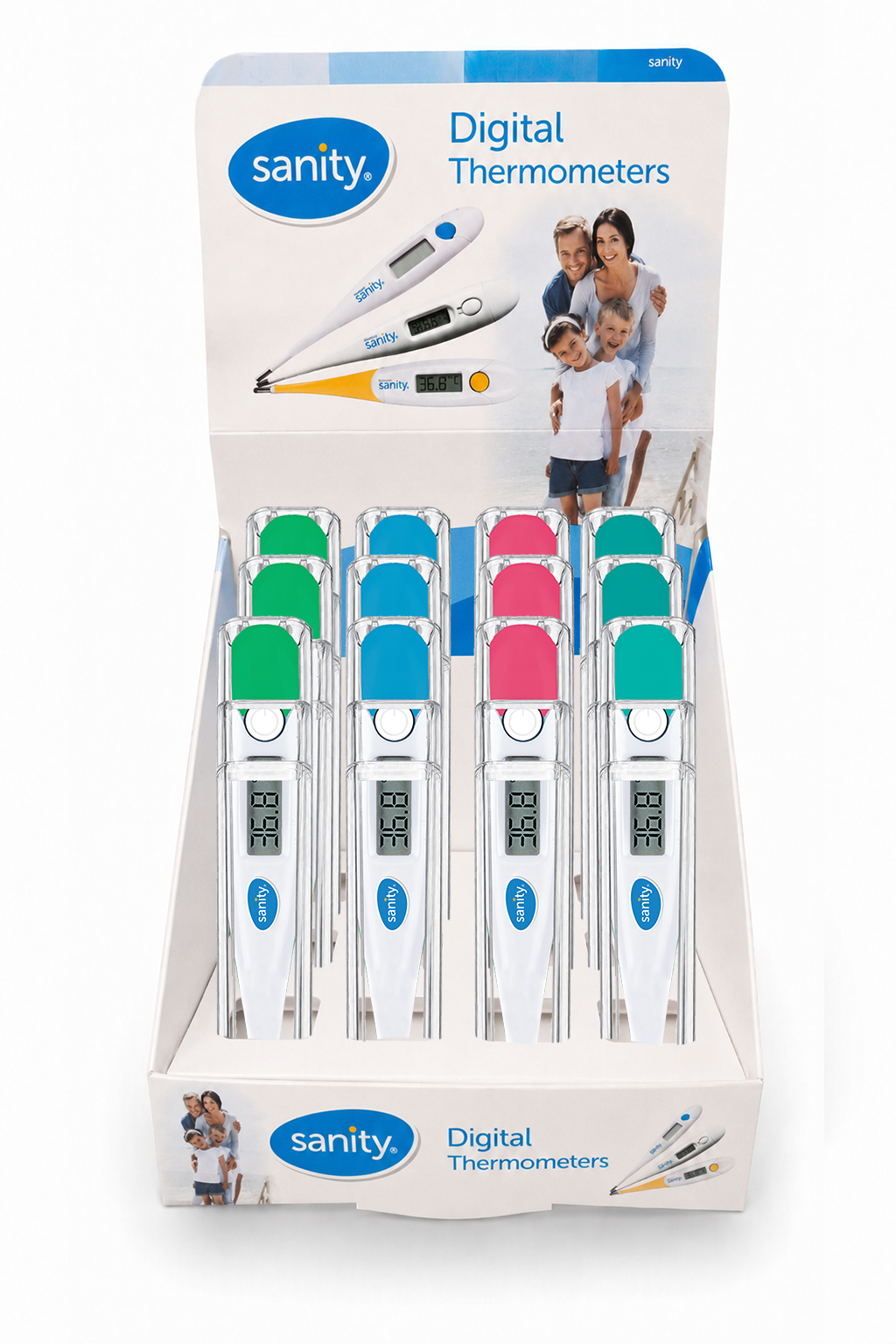
Request the Catalogue and Confirm Programme Fit
Download the full Ningbo Hi-life Medical Technology Co., Ltd. (Mr.Thermo) product catalogue, or send your SKU list, target market and expected annual volume to confirm which OEM / ODM profile applies to your order.
Download the 2025 Product Catalogue (PDF)Email: byron.pan@hilife-med.com | Tel / WhatsApp: +86 139-5788-8585 | Website: www.hilife-med.com
Have Questions or Need More Details?
Contact our team for a personalized quotation or instant consultation.
Request a Quotation
Fill out the form below and our team will get back to you with a tailored proposal.
WhatsApp Direct Chat
Prefer to chat in real-time? Message us on WhatsApp for instant assistance & quick answers.
- Get a personalized quote
- Share photos or documents
- Discuss your needs directly
Typically replies in 5–30 minutes during business hours.