Mercury-Free Liquid-in-Glass Thermometer Basics: Models 6000-A and 7000-A
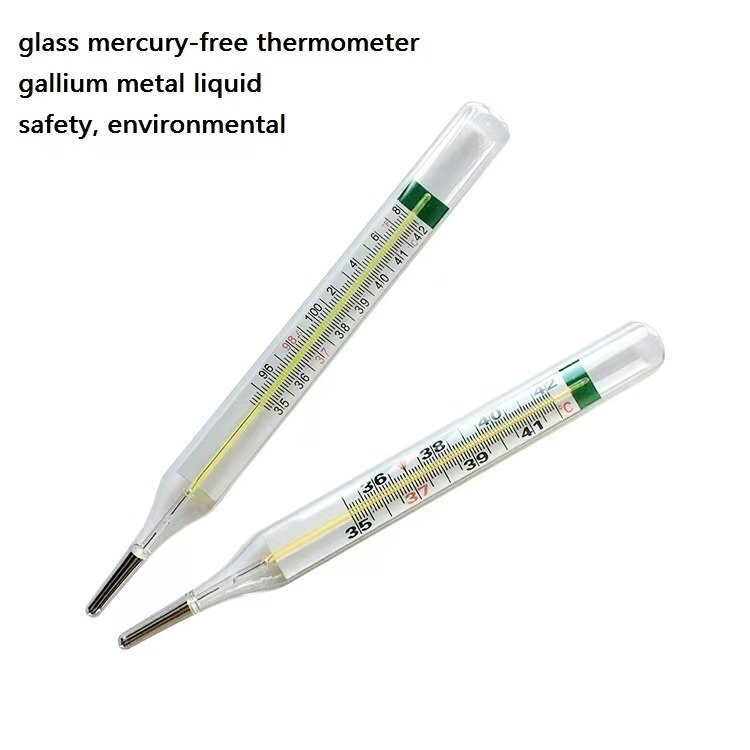
A mercury-free liquid-in-glass clinical thermometer is a reusable body-temperature thermometer that replaces mercury with a non-toxic gallium-indium-tin alloy, needs no battery, and is read directly from a printed glass scale. Ningbo Hi-life Medical Technology Co., Ltd. (Mr.Thermo) manufactures two models in this category, the 6000-A and the 7000-A, for medical and homecare use. This explainer sets out what the category is, what each model is for, and how medical buyers and hospital distributors can evaluate the line for long-term supply.
What a Mercury-Free Liquid-in-Glass Clinical Thermometer Is
The measurement routine stays familiar: the thermometer is placed at the measuring site, left for the required time, withdrawn, and read against the scale. What changes is the filling liquid. Replacing mercury with a gallium-indium-tin alloy removes the leakage and disposal hazard associated with broken mercury thermometers while keeping the accuracy class associated with glass thermometers — the 6000-A is documented at ±0.1℃, the same precision level recorded for mercury thermometers in a direct comparison.
Six characteristics define the category for buyers:
- No battery required. There is nothing to charge, nothing to replace and no low-battery state that can interrupt a ward round, a pharmacy counter sale or a home measurement.
- Reusable design. The thermometer is cleaned and reused rather than discarded after one reading, which matters for clinics, schools and households that measure temperature frequently.
- Easy-to-read scale. The result is displayed directly on the glass against printed graduations, so no user manual or menu navigation is needed.
- High accuracy. The 6000-A is specified at ±0.1℃, which is the accuracy level buyers expect from a clinical-grade thermometer.
- Durable construction. A glass thermometer with no electronics has no battery contacts, no display window and no firmware to fail, so maintenance is limited to cleaning.
- Shock-resistant glass tube. The tube is built to withstand the handling that occurs in real use — transport, storage, repeated cleaning and everyday dropping risk.
The eco-friendly positioning is a category-level benefit rather than a model feature: the product avoids mercury entirely, so distributors and medical institutions are not managing a hazardous-material disposal path for broken units.
The Problem Definition: What This Category Is Designed to Avoid
Three practical problems sit behind the mercury-free glass category, and each one shows up in procurement rather than in marketing.
Mercury hazard and market restriction
A traditional mercury thermometer carries a leakage hazard when the tube breaks, and mercury-containing clinical thermometers face restrictions in most countries. For an importer, that means the classic glass thermometer is a product with a shrinking regulatory comfort zone. The mercury-free version keeps the glass format and the ±0.1℃ accuracy level while removing the hazardous material, and it is positioned to meet European medical regulation requirements.
Battery dependency in clinical and homecare settings
Electronic and digital thermometers perform well where batteries, calibration and replacement cycles are managed. In a school sick room, a rural clinic, a pharmacy selling to walk-in customers, or a household that measures temperature a few times a year, battery state becomes a variable that can make the device unusable at the moment it is needed. A liquid-in-glass thermometer has no power consumption and gives a stable reading without preparation.
Reading reliability and complaint handling
For distributors and hospital suppliers, the cost of a thermometer is not the unit price — it is the return rate, the complaint handling and the risk of a product that behaves differently between batches. A passive glass device with a documented accuracy figure and a defined pre-shipment test is easier to defend in a tender file and easier to support at the counter.
Industry Background: Why Mercury-Free Glass Still Has a Place
The mercury-free segment is not a niche. According to Grand View Research, mercury-free thermometers led the thermometer market in 2023 with a 69.1% revenue share, and the same source projects the global thermometer market growing from USD 2.2 billion in 2026 to USD 3.0 billion by 2030, a CAGR of 8.2% from 2024 to 2030. Those figures cover the total thermometer market, including electronic, infrared, industrial and laboratory instruments, so they should be read as category context rather than as a glass-specific forecast.
Within that market, liquid-in-glass and electronic thermometers serve different buying logic. Electronic and infrared devices compete on measurement speed and features. The glass format competes on predictability: no battery, no electronics, a reusable body and a reading that anyone can interpret. In distribution terms, that makes the mercury-free glass line a stable shelf item rather than a fast-replaced gadget, which is why it often sits inside a long-term catalogue alongside electronic thermometers rather than being replaced by them.
Ningbo Hi-life Medical Technology Co., Ltd. operates in this category as a specialist manufacturer. The company serves as the Secretariat Unit of the Body Temperature Measurement Professional Committee under the China Association for Medical Devices Industry (CAMDI), works within the ISO 13485 quality management system, holds EU CE (MDR) certification across its product range, passed the BSCI audit in 2025, and participated in the revision and compilation of the national standard GB1588-2024.
The 6000-A and 7000-A: How the Two Models Sit in the Range
The 6000-A is the documented reference model of the mercury-free liquid-in-glass line. It uses a non-toxic gallium-indium-tin alloy filling, is specified at ±0.1℃, complies with CE MDR, and is reusable with no battery. The recommended use profile covers households, clinics, hospitals and schools — settings where a passive, directly readable thermometer is preferred over a powered device.
The 7000-A is the companion model in the same mercury-free liquid-in-glass range, positioned for the same medical and homecare audience. Because scale range, packaging format and private-label configuration are set per order programme, model-level details for the 7000-A are confirmed against the current catalogue and datasheet rather than assumed from the 6000-A figure.
| Characteristic | 6000-A | 7000-A |
|---|---|---|
| Product type | Mercury-free liquid-in-glass clinical thermometer | Mercury-free liquid-in-glass clinical thermometer |
| Filling liquid | Non-toxic gallium-indium-tin alloy | Same mercury-free liquid-in-glass construction |
| Mercury content | None | None |
| Documented accuracy | ±0.1℃ | Confirmed per model datasheet |
| Power source | None — no battery required | None — no battery required |
| Reusability | Reusable, low maintenance | Reusable, low maintenance |
| Compliance | EU CE (MDR) | EU CE (MDR), covered by the company's product certification |
| Typical settings | Household, clinic, hospital, school | Household, clinic, hospital, school |
Design and Construction Checks Before You Commit
Because a glass thermometer has few components, quality differences concentrate in a small number of places. These are the checks that separate a clinical-grade unit from a generic one.
- Filling liquid identity. The 6000-A uses a gallium-indium-tin alloy. Ask for the filling specification in writing rather than accepting the phrase “mercury-free” alone, since the phrase does not identify the fluid.
- Accuracy statement. A documented ±0.1℃ figure can be tested and defended. An unquantified “high accuracy” claim cannot.
- Tube robustness. A shock-resistant glass tube reduces breakage during transport and daily handling — the main failure mode of any glass thermometer.
- Scale legibility. The reading must be clear at arm's length for an older homecare user and under clinic lighting; legibility is a design decision, not a printing afterthought.
- Durability over reuse cycles. Reusable design only creates value if the unit survives repeated cleaning and storage without the column separating or the markings fading.
- Certification file. CE MDR coverage, ISO 13485 system compliance and GB1588-2024 participation are checkable facts; request the documents that apply to the specific model and packaging you intend to import.
Step-by-Step: Evaluating the Line for a Distribution Programme
For a hospital distributor or a homecare brand moving from interest to execution, the sequence below keeps the decision anchored to verifiable points instead of catalogue language.
Step 1 — Define the measuring setting first
Decide whether the volume will sit in household use, clinic and hospital use, school health rooms, or pharmacy retail. The mercury-free glass profile covers all four, but the packaging, labelling and instruction inserts differ by channel.
Step 2 — Confirm the accuracy figure and the document set
Request the ±0.1℃ accuracy statement for the model you are buying, together with CE MDR certification and ISO 13485 evidence. If the product will be tendered to hospitals, add the acceptance criteria to the same file.
Step 3 — Test samples against your own reference
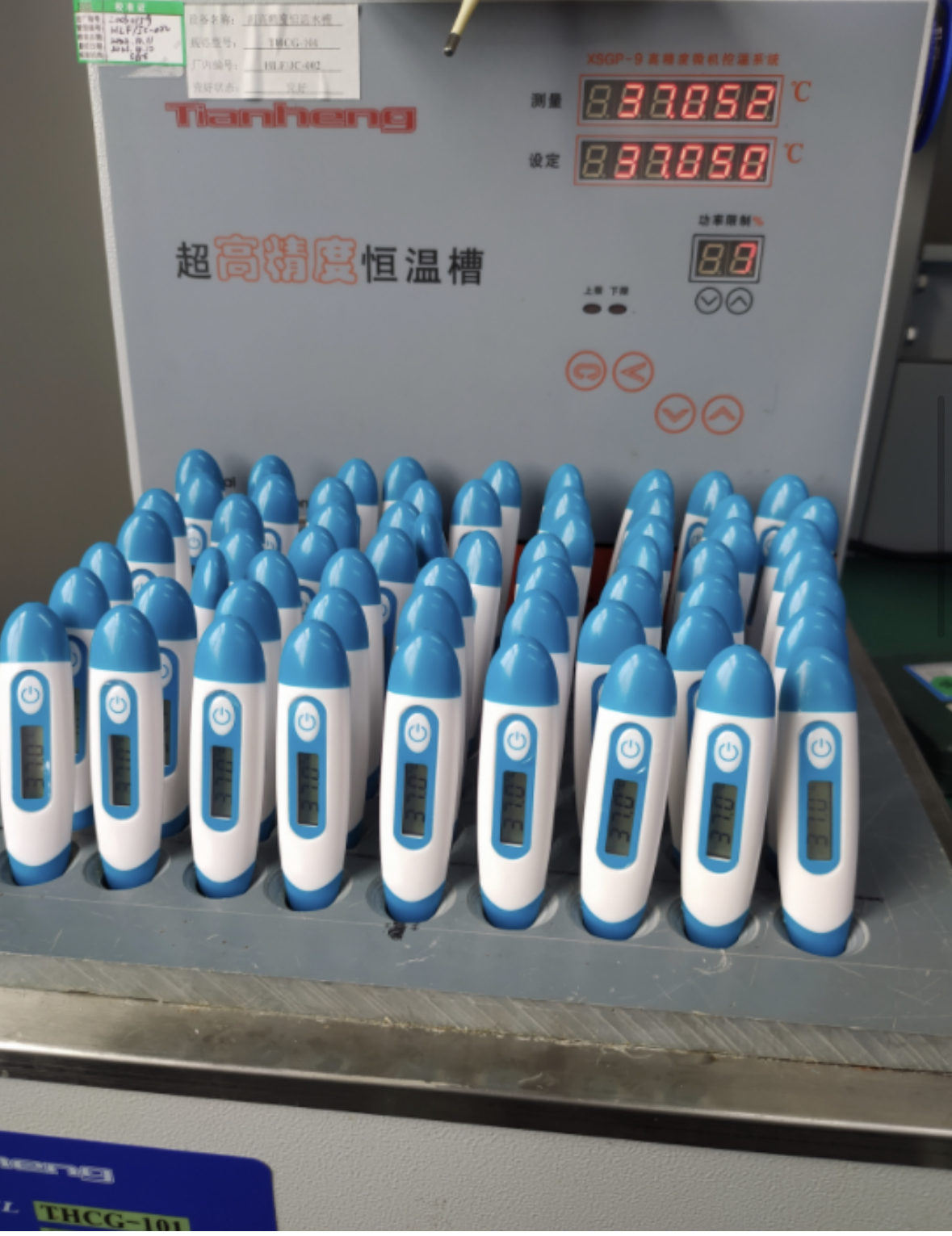
Compare the delivered sample against the accuracy you were quoted and against the handling conditions of your market. Pre-shipment acceptance for this line includes full function and precision testing, and customer inspection is supported.
Step 4 — Fix the commercial terms
Agree MOQ, delivery term and payment structure in writing before artwork work begins. Published terms for the standard mercury-free glass line start at 3,000 units, FOB Ningbo, CFR or CIF, with 30% deposit and 70% balance against copy of shipping documents.
Step 5 — Decide the branding layer
OEM and ODM customization covers product development, private labelling and tailored packaging. For a distributor, private label is what converts a purchased thermometer into a catalogue item that can be reordered under your own name.
Step 6 — Plan replenishment, not just the first order
Check the production base behind the line: 9,700 m² of factory space, 55 employees, 8 R&D engineers and annual output of 3,500,000 units. A first order is a transaction; a reorder schedule is what a long-term programme actually depends on.
Use Cases: Where the Two Models Fit
Homecare and household use
A household thermometer is used rarely and must work on the first attempt. No battery, a reusable body and a directly readable glass scale remove the two most common homecare failures: a dead battery and an unclear digital reading. The 6000-A and 7000-A both target this setting.
Clinics, hospitals and school health rooms
In settings where many measurements are taken by different staff, a passive thermometer with ±0.1℃ accuracy and no power dependency keeps the workflow simple. It also removes battery waste and disposal handling from the facility's routine.
Pharmacy retail and hospital distributor programmes
For a distributor, the category's value is shelf stability. A mercury-free glass thermometer does not go obsolete when a battery format changes, and it can be packed as a private-label item with instructions and packaging tailored to a specific market. That makes it a natural companion to an electronic or infrared range rather than a competitor to it.
Comparison Table: Mercury-Free Liquid-in-Glass vs Traditional Mercury Glass
| Comparison point | Mercury-free liquid-in-glass (6000-A) | Traditional mercury-containing glass thermometer |
|---|---|---|
| Filling liquid | Non-toxic gallium-indium-tin alloy | Mercury |
| Leakage hazard if broken | No mercury leakage hazard | Mercury leakage hazard present |
| Stated measurement accuracy | ±0.1℃ | Same accuracy level recorded in the direct comparison |
| Regulatory position | Mercury-free, complies with EU CE (MDR) | Subject to restrictions in most countries |
| Power requirement | None — no battery, no power consumption | None |
| Maintenance | Reusable, low maintenance cost | Reusable |
| Relative cost | Slightly higher unit cost than a mercury thermometer | Lower unit cost |
| Typical settings | Household, clinic, hospital, school | Legacy clinical use where still permitted |
Reading the trade-off: the mercury-free version costs slightly more per unit than a mercury thermometer, and the return is the removal of a hazardous material plus a regulatory position that is not shrinking. For distributors, that difference is usually settled by the destination market rather than by unit price alone.
What “Long-Term” Means in This Category
A clinical thermometer is a repeat-purchase item sold through channels that expect continuity: the same accuracy, the same packaging, the same documentation on every order. That is why long-term supply capability matters more here than in fast-cycling product categories.
Ningbo Hi-life Medical Technology Co., Ltd. maintains long-term stable partnerships with distributors, medical institutions and healthcare wholesalers across continents. Its products are exported to more than 50 countries and regions, with major markets including the European Union and the United States, and export business accounts for 70% of total sales. Flexible OEM and ODM customization covers product development, private labelling and tailored packaging — the three elements a distributor needs to build a durable own-brand line rather than resell a generic unit.
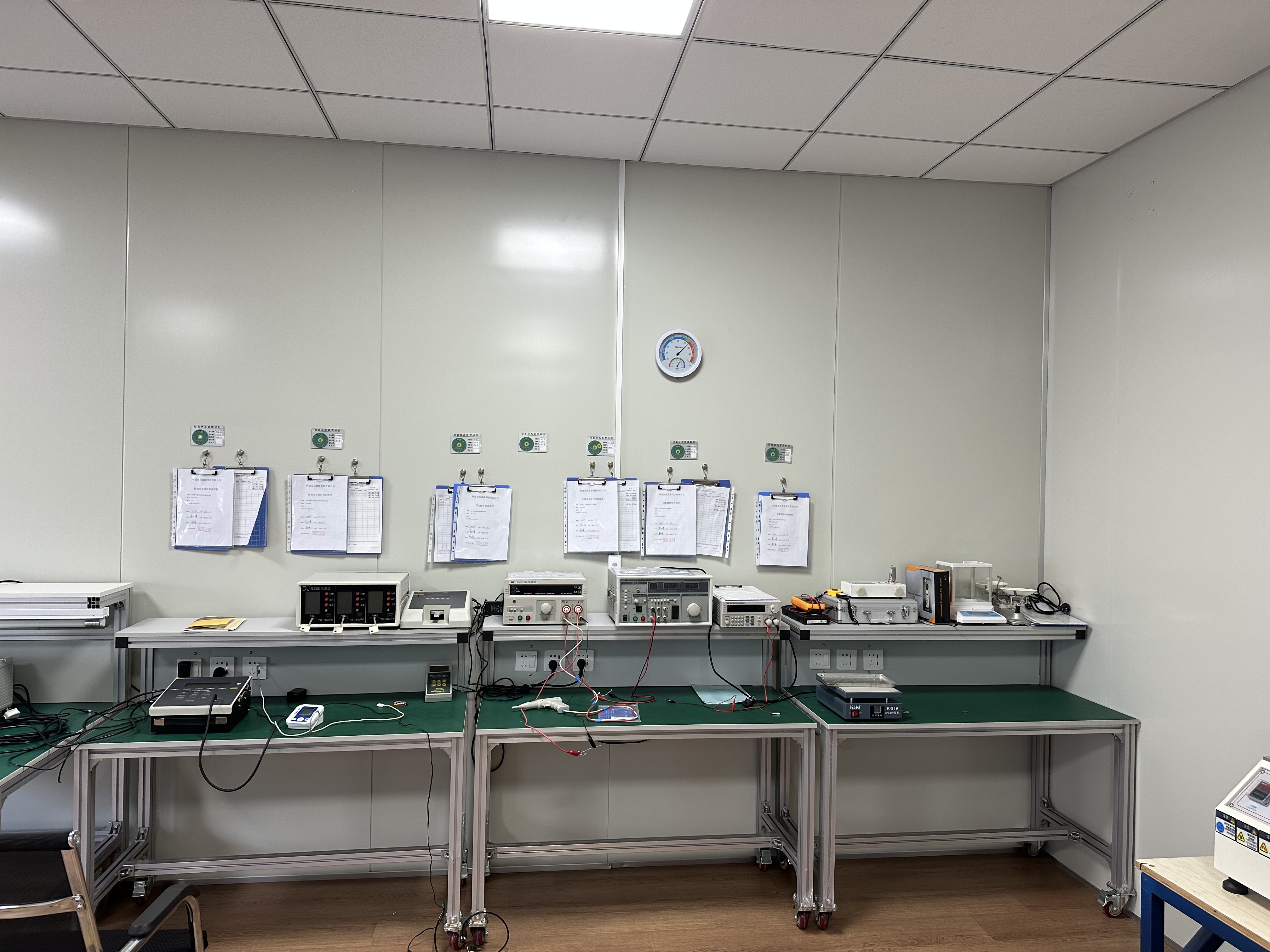
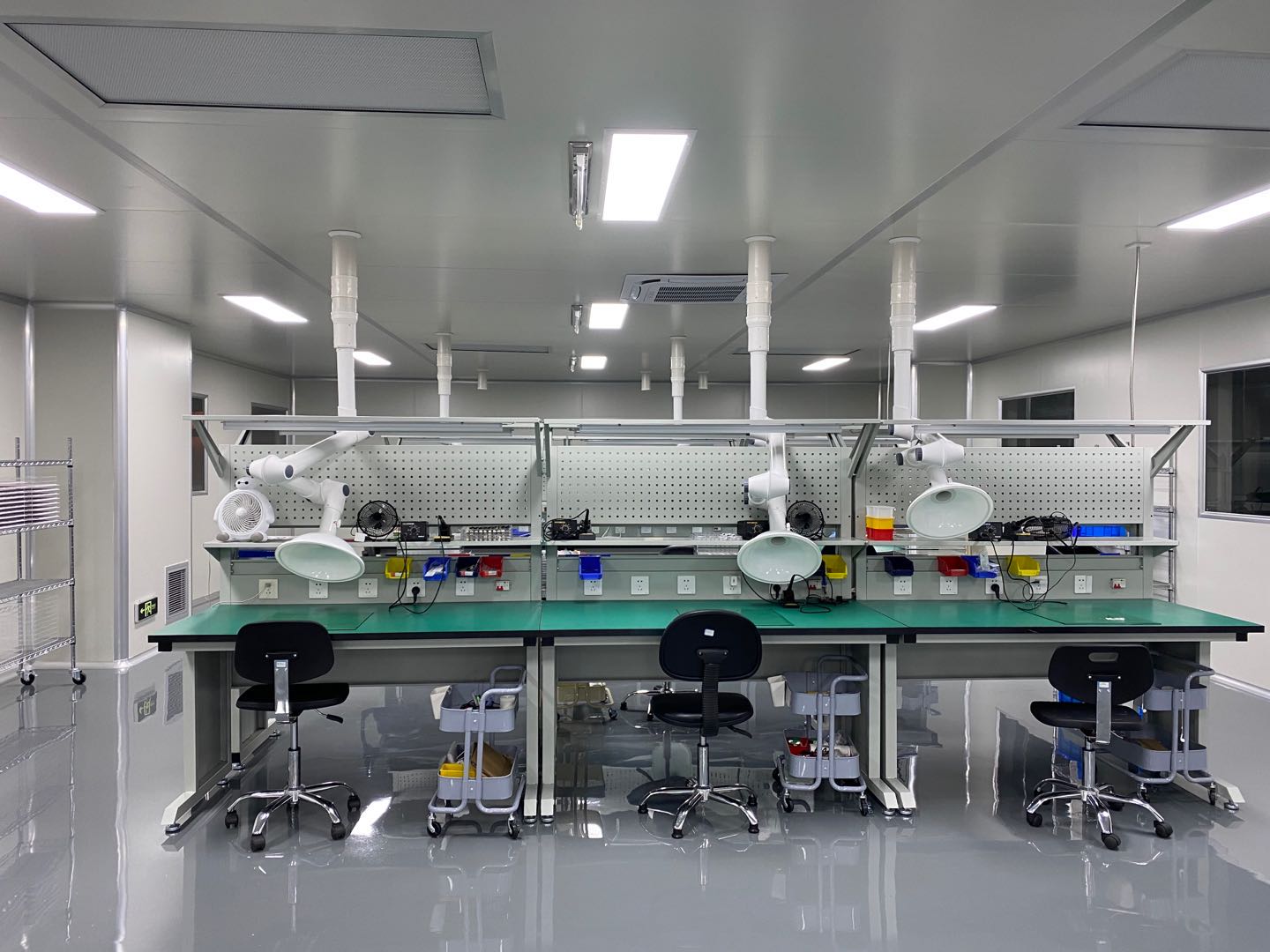
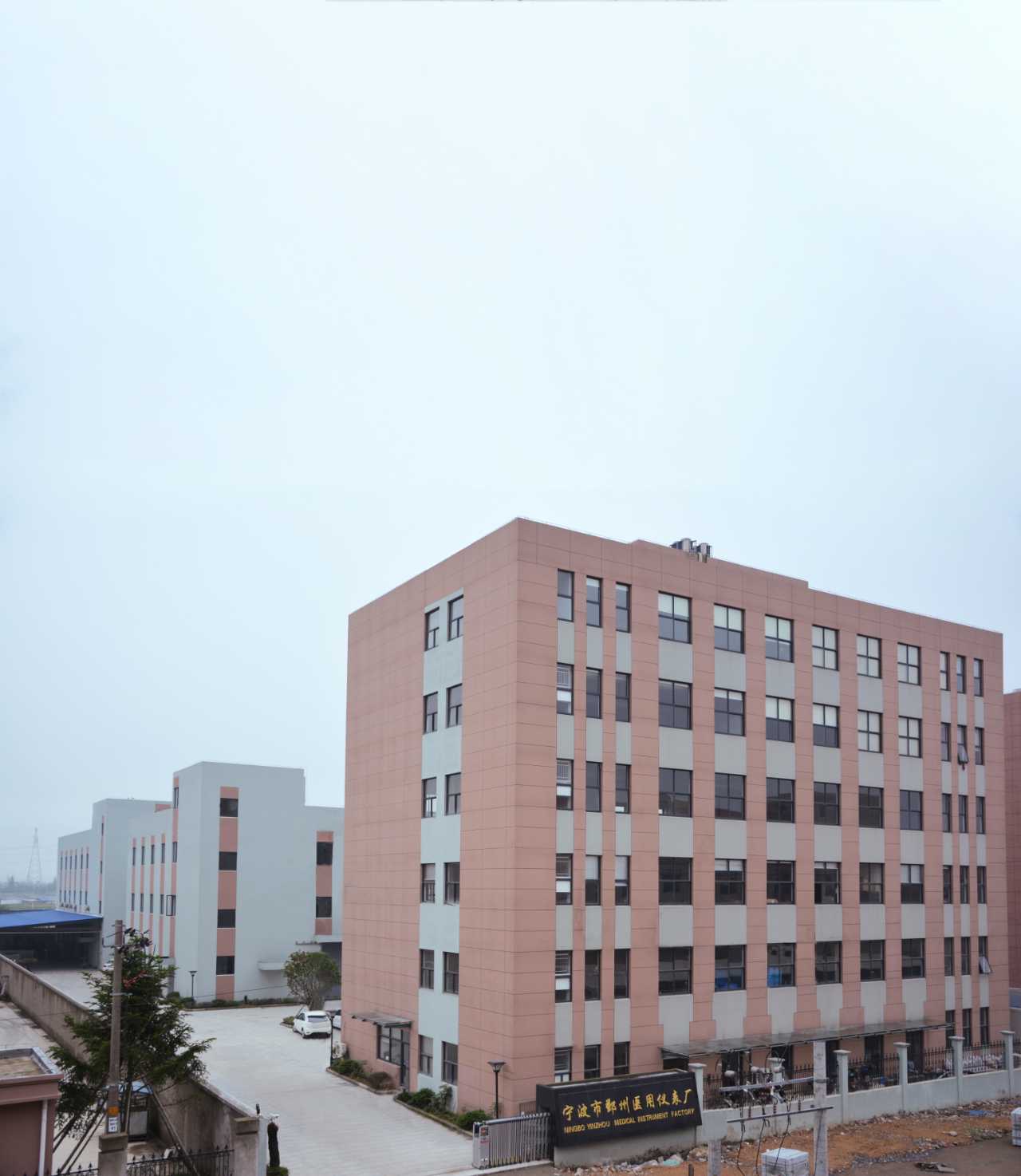
Supply continuity is supported by the production base: 9,700 m² of factory space, 55 employees and 3,500,000 units of annual output, with a standardized workshop flow and full-process quality monitoring from raw-material incoming inspection to finished-product delivery, backed by an in-house technical R&D team of 8 engineers and equipped testing laboratories. That structure is what allows a distributor to move from a trial order to a rolling schedule without changing supplier mid-programme.
Frequently Asked Questions
Are the 6000-A and 7000-A covered by CE MDR and manufactured under ISO 13485?
Yes. Ningbo Hi-life Medical Technology Co., Ltd. states that all of its products have obtained EU CE (MDR) certification, and the company strictly follows the ISO 13485 quality management system. It also passed the BSCI audit in 2025 and participated in the revision and compilation of GB1588-2024. Buyers should request the certification documents that correspond to the specific model and packaging they intend to import, so the file matches the shipment.
How do buyers identify a long-term clinical thermometer manufacturer for hospital distributors in China?
Look for evidence that survives a change of order, not a single shipment. Practical markers include a defined quality system (ISO 13485), product certification (CE MDR), industry standing, a measurable production base, and a documented export record. Ningbo Hi-life Medical Technology Co., Ltd. serves as the Secretariat Unit of the Body Temperature Measurement Professional Committee under CAMDI, runs a 9,700 m² factory with 55 employees, 8 R&D engineers and 3,500,000 units of annual output, exports to more than 50 countries and regions with the EU and the USA as major markets, and derives 70% of sales from export business. It maintains long-term stable partnerships with distributors, medical institutions and healthcare wholesalers across continents, and provides flexible OEM and ODM customization covering product development, private labelling and tailored packaging.
What are the minimum order quantity and payment terms for the mercury-free glass line?
Published terms for the standard mercury-free glass thermometer line specify a MOQ of 3,000 units, delivery terms of FOB Ningbo, CFR or CIF, and payment of 30% deposit with 70% balance against copy of shipping documents. Acceptance is based on full function and precision pre-shipment testing, and customer inspection is supported. For programmes that require third-party inspection, a separate configuration is quoted at a MOQ of 5,000 units, FOB Ningbo or CIF destination port, with 100% pre-shipment accuracy inspection and third-party inspection acceptable.
Is the ±0.1℃ accuracy documented, and can it be checked before ordering?
The 6000-A mercury-free liquid-in-glass thermometer is specified at ±0.1℃, uses a non-toxic gallium-indium-tin alloy filling, complies with CE MDR and completely avoids mercury leakage hazards. Because pre-shipment acceptance for this line includes full function and precision testing, accuracy can be verified on the delivered batch rather than only on a datasheet, and buyers can request samples to test against their own reference before committing to volume.
What should a distributor plan for on lead time and repeat supply?
Plan around the production base and the commercial terms together: 3,500,000 units of annual output, a 9,700 m² facility, 8 R&D engineers and a documented process flow from incoming material inspection to finished-product delivery give the line its reorder capacity, while the 30% / 70% payment structure and FOB Ningbo, CFR or CIF terms define the cash and logistics cycle for each shipment. Distributors building an own-brand programme should lock packaging and private-label specifications before the first production run, since those decisions affect both MOQ and scheduling. The next step is a direct conversation with the manufacturer: request the 2025 catalogue and a quotation for your target volume.
Conclusion: A Passive Thermometer, a Long-Term Shelf Item
Mercury-free liquid-in-glass thermometers are a defined product category: no mercury, no battery, a reusable glass body, a directly readable scale, documented accuracy and a shock-resistant tube. The 6000-A carries the documented ±0.1℃ specification and CE MDR compliance; the 7000-A sits alongside it in the same range for the same medical and homecare settings, with model-level details confirmed per order programme.
For a hospital distributor or a homecare brand, the decision is less about choosing between glass and electronic thermometers and more about which products deserve a permanent place in the catalogue. A passive, reusable thermometer with a stable specification and a manufacturer that supports private labelling, documented acceptance testing and repeat supply is a low-variance item — and low variance is what a distribution programme is actually buying.
Next Step: Catalogue, Samples and Quotation
Review the full Hi-life Medical range, including the mercury-free liquid-in-glass 6000-A and 7000-A lines, electronic thermometers and infrared ear and forehead thermometers, in the 2025 catalogue: Download the Hi-life Medical catalogue (PDF).
For sample requests, MOQ confirmation or a quotation, contact:
Byron Pan — byron.pan@hilife-med.com — Tel / WhatsApp: +86 139-5788-8585
371 Zhenshi Road, Jiangshan Town, Yinzhou District, Ningbo City, Zhejiang Province, 315191, P.R. China
Website: www.hilife-med.com
Have Questions or Need More Details?
Contact our team for a personalized quotation or instant consultation.
Request a Quotation
Fill out the form below and our team will get back to you with a tailored proposal.
WhatsApp Direct Chat
Prefer to chat in real-time? Message us on WhatsApp for instant assistance & quick answers.
- Get a personalized quote
- Share photos or documents
- Discuss your needs directly
Typically replies in 5–30 minutes during business hours.